


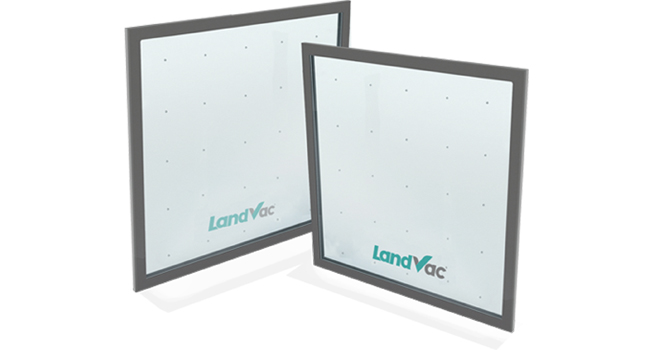
As a global leader in the R&D and manufacturing of vacuum insulated glass, LandVac is committed to solving the most extreme thermal challenges in transparent building envelopes. The following technical FAQ, the sixth in the series of FAQ about Titanium Vacuum Glass, has been compiled to address key concerns regarding customisation, reliability in extreme environments, and system installation.
These professional insights will provide a deeper understanding of the exceptional performance of Titanium Vacuum Glass in complex conditions.
Q: Is it possible to laser-mark the “LandVac” logo directly onto the strip getter of LandGlass Titanium Vacuum Glass?
A: Yes, LandVac Titanium Vacuum Glass supports the process of marking logos directly onto the getter material.
Q: When vacuum glass is used in high-humidity environments, how do you ensure that the internal materials (which appear to be metal) do not undergo abnormalities such as ionisation or water decomposition?
A: During the manufacturing of Titanium vacuum glass, high-humidity and high-temperature scenarios are fully accounted for.
In addition to the metal edge-sealing, LandVac applies a secondary waterproof sealant to prevent ionisation or corrosion of the metal joint. The waterproof sealing materials have undergone rigorous ageing tests—including high-temperature, high-humidity, boiling, UV radiation and salt spray tests—to effectively ensure the long-term reliability of the edge-sealing materials.
Q: When using single-pane vacuum insulated glass (VIG), the thermal break in the profile is often too narrow, leading to heat transfer at the edges and condensation issues. How can this be resolved?
A: In practical applications, the profile’s thermal break should be at least 30mm wide to meet thermal performance standards in most regions. For projects with more stringent requirements, condensation can be mitigated by increasing the glass bite (insertion depth) or by incorporating insulating materials around the glass perimeter.