




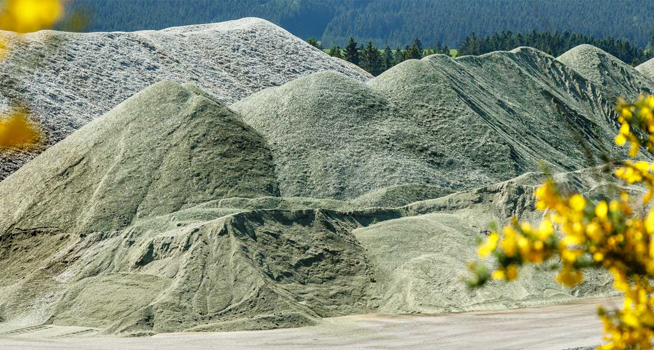
For Wiegand-Glas, Glass Recycling Day is more than just an event. It’s an opportunity to emphasise the central role of recycled glass in the production of glass packaging while also drawing attention to the challenges currently facing the recycling loop.
Recycled glass is the most important raw material for new glass. Since the early 1970s, the family-run company has operated a closed-loop system. Today, Wiegand-Glas processes more than one-third of all waste glass collected in Germany annually in three state-of-the-art recycling facilities located in Steinbach am Wald and Drei Gleichen. The average recycled content in new glass containers is 77 percent, significantly above the national average of 60 percent. For green glass, peak values exceed 95 percent.
Glass can be recycled infinitely without losing quality. Every 10 percentage points of recycled content save 2 to 3 percent energy and reduce CO2 emissions. At Wiegand-Glas, this translates into approximately 215,000 tonnes of CO2 savings per year.
Wiegand-Glas identifies need for modernisation of the existing recycling loop
The recycling process is technically nearly perfected: advanced, multi-stage systems separate waste glass from metals, plastics and porcelain. Optical sorting systems detect and remove contaminants, resulting in high-quality cullet, the raw material for new packaging.
However, the system only functions effectively if it remains economically viable and logistically efficient. Currently, challenges are evident: logistics, collection and processing costs and material quality are critical factors. To ensure long-term stability, continuous modernisation is required, not only in technology, but also in collaboration between collection, processing, industry and consumers.
“With every tonne of waste glass we process and reintroduce into production, we replace primary raw materials and significantly reduce our energy and resource consumption,” said Managing Director Nikolaus Wiegand. “That’s why it’s clear to us: waste glass must stay in the loop. But for this to remain economically feasible, industry, government and associations must work together promptly on future framework conditions. Every consumer also plays a vital role by sorting and disposing of glass correctly.”
Only then will the loop remain alive, and waste glass will continue to be the most valuable raw material for a sustainable future.