




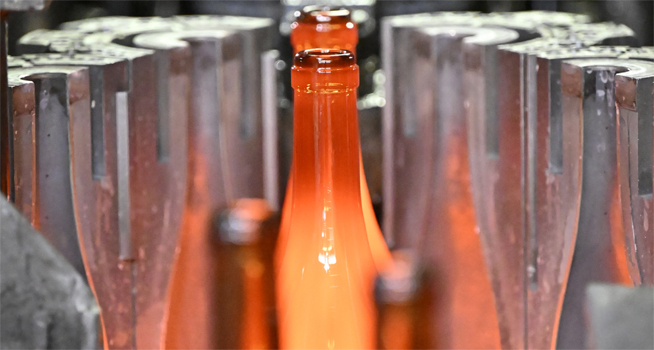
Glass has been part of our daily lives for over 100,000 years. From its natural form, obsidian, used in tools, weapons and jewellery, to the modern bottle born during the Renaissance, glass has continuously evolved.
Today, recycling glass is at the core of its value – with over half of new glass made from recycled cullet, without losing any quality. Verallia’s business model thrives on this circular economy, from the extraction and transformation of raw materials to eco-design and production.
The story of glass is fascinating, its evolution through history, and how it’s shaping the future with sustainability at its core:
- 100,000 years BCE
Originally, glass was used in its natural form, obsidian, a shiny black volcanic rock, to make tools, weapons and jewellery. - 3,000 years BCE
Glass was first manufactured in the Middle East. - 400 years BCE
Glass has been “recycled” since Antiquity and the Middle Ages. Broken glass was collected and used as a form of payment. - 100 years BCE
A major turning point: The invention of the glass blowing technique in what is now Syria and Lebanon, producing hollow glass. - ≈1500
During the Renaissance period, the modern bottle was born. - 1665
Creation of the Manufacture Royale des Glaces in the village of Saint-Gobain, which gave its name to the industrial group. - 19th century
The deposit system is invented in England for glass bottles. - 1827
The glassmaking plant at Vauxrot, in France, is founded. It joined Saint-Gobain in 1918. - 2010
Birth of the Verallia brand within Saint-Gobain’s Packaging branch. In 2015, Verallia became an independent group. - 2020
Verallia embraces its purpose: “re-imagine glass for a sustainable future”, which guides and inspires all its actions. - 2025
Verallia’s commitment to a Net Zero 2040 trajectory is validated by the SBTi.