




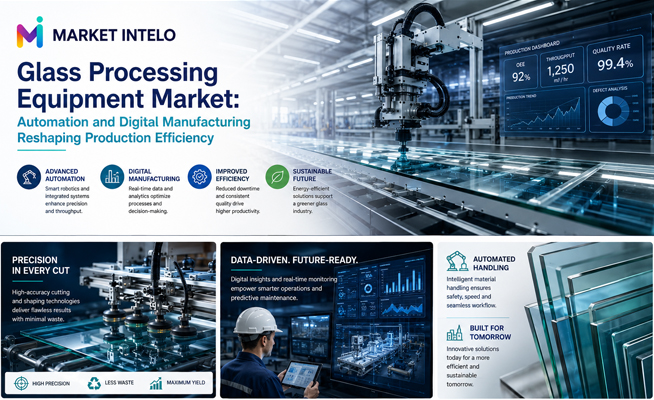
According to MarketIntelo, the market value of glass processing equipment is expected to increase from USD 3.99 billion in 2025 to USD 6.65 billion in 2034 as a result of 5.8% CAGR during this period. Factors boosting the rise of the sphere include growing investments in automated production lines, digital production technologies, precision processing systems, and energy-efficient equipment overall in the glass industry.
A crucial progress in technology is moving away from isolated systems to fully integrated workstations. Each washer, heating equipment or CNC machine becomes a source of data which reports its operational details, quality parameters and maintenance alerts that go into plant-wide system.
Instead of operator’s running for alarms, the system is able to forecast when a spindle will stop meeting its standard or when temperatures in furnaces will lead to unacceptable defects, and intervene before wasting materials. In advanced factories, operations almost self-balance: cycles run in coordination, bottlenecks are monitored in real-time, and energy-intensive processes are timed to prevent peaks.
Glass manufacturers are changing their production processes because of the digital self. The virtual version of the furnace or processing chamber provides engineers with the ability to evaluate recipes, temperature curves, and layouts before starting the work. The team, linking past production information with physics models, is able to simulate different options, e.g. more recycling materials, new coatings, and alternative energy.
The scope of efficiency in the current environment extends beyond productivity and efficiency. Metrics regarding the energy consumption per processed square meter, CO₂ emissions, the amount of undesired travel of products during manufacturing, and potential downtime are also tracked and presented on the same dashboard.
With increased use of robotics, the job of the personnel has shifted to data-supported optimisation, remote diagnostic of manufacturing process, and interaction among different automation lines.
For mid-sized processors especially, the strategic question is not whether to automate, but how to phase investments so that each new machine, sensor and software module strengthens a coherent, data-centric production system rather than creating another isolated island of automation.
For more information: