



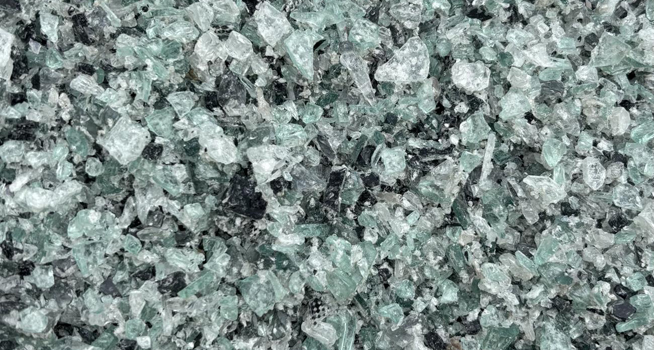
Until recently, the glass cullet recovered from wind-shields were not used in the industrial production of new car windows.
Thanks to state-of-the-art processing techniques and efficient separation of contaminants such as PVB interlayers, plastic coatings, metal wiring and electronic components, the range of applications has now been expanded to include another high-quality use.
Through collaboration between AGC‘s R&D department and long-standing partner Reiling, a German-based flat glass recycling specialist, AGC has validated a robust protocol to treat and consume these wind-shields in its float furnaces.
Reilings’ specialised recycling process effectively separates the high-quality glass from contaminants, yielding the pure cullet fraction that meets the stringent specifications for producing new automotive float glass at plants like AGC Retenice, Czech Republic. The quality, safety and performance of the resulting wind-shields are identical to those made from virgin raw materials.
In 2025, a collaboration between the AGC Retenice facility, automotive processing local teams in Chuderice, Tatabanya and Koszalin, and Recycle Glass allowed AGC to successfully incorporate tens of thousands of tons of pre-consumer cullet into its production, mostly cutting losses.
Building on this success, as of 2026, AGC has set an ambitious goal to add to this the collection and treatment of more than 300,000 pre-consumer assembled wind-shields.
The next logical step is to apply this proven process to post-consumer wind-shields from the automotive wind-shield replacement, aftermarket and end-of-life vehicle sectors.
With this breakthrough, AGC is not only advancing its own decarbonisation roadmap but is also setting a new benchmark for the entire European automotive industry, proving that a sustainable, circular economy for automotive glass is achievable today.