




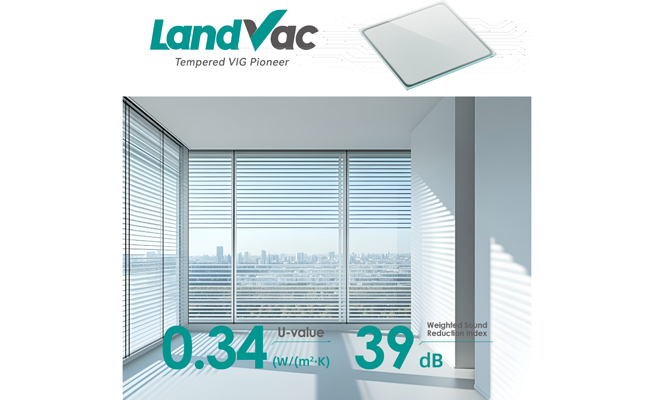
LandVac Titanium Vacuum Glass (LandVac Ti-VIG) has emerged as the premier material for high-end architectural windows, doors, and curtain walls, thanks to its exceptional thermal insulation and energy-saving performance. While LandVac requires a higher initial investment compared to traditional insulated glass (IGUs), its ultimate performance and outstanding full life-cycle energy savings effectively slash building operation and maintenance (O&M) costs.
Q1: Why is the cost of LandVac Titanium Vacuum Glass relatively high?
A: The cost of LandVac Titanium Vacuum Glass is primarily driven by raw materials and highly specialised manufacturing processes.
- Premium Materials: To ensure that vacuum insulated glass delivers peak thermal indicators and mechanical performance, it utilises a flexible metal edge-sealing material. The cost of this specialised material is significantly higher than that of standard options.
- Stringent Manufacturing: To guarantee uncompromising quality, the production of LandVac Vacuum Glazing is far more complex and rigorous than that of other vacuum glass products. The fabrication process involves multiple critical phases, including deep precision cleaning, high-temperature degassing, and exhaustive quality control inspections.
Q2: What impact does implementing vacuum glass have on overall building construction costs?
A: Total building expenditures consist of initial construction costs and long-term O&M costs. Compared to triple-pane, double-cavity insulated glass, upgrading to vacuum glass increases the glass-specific sourcing cost by approximately 50 to 60 percent. However, its superior energy-saving performance dramatically lowers ongoing heating and cooling expenses.
- Retrofit/Late-Stage Integration: Financial modelling shows that this incremental upfront cost can be fully recovered within 5 to 6 years through energy savings.
- Early-Stage Design Integration: If vacuum glass is integrated into the project during the initial architectural design phase, the curtain walls, window frames and doors can utilise lightweight structural designs. This optimisation caps the overall project cost increase to under 25 percent, shortening the payback period to approximately 2 years.
Q3: What are the quantifiable economic benefits of LandVac Ti-VIG?
A: From a long-term perspective, the financial returns of LandVac are substantial. Consider these data-driven benchmarks:
- Regional Energy Reduction: For a 7,000 square metre building in Northeast China (Shenyang), switching from standard insulated glass to LandVac vacuum glazing reduces electric heating energy consumption by 30 percent in the winter and electric cooling consumption by 20% in the summer.
- Commercial Scale ROI: In a large-scale project with a total glass surface area of 10,000 square metres (such as the Luoyang Innovation Building), vacuum glass saves USD 81,500 (approximatively RMB 589,000) per year in electricity bills and cuts carbon emissions by 621 tonnes annually.
Ultimately, adopting vacuum glass significantly lowers operational overhead for property owners while delivering powerful, long-term societal benefits through energy conservation and carbon reduction.