




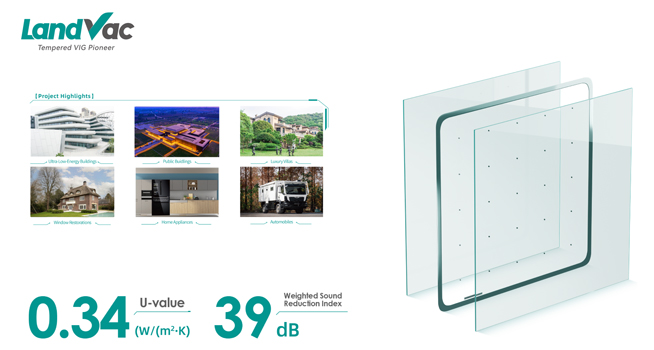
Vacuum Insulated Glass (VIG), known for its ultra-low heat transfer coefficient, superior sound insulation, and excellent anti-condensation performance, has become a core material choice for ultra-low energy and green buildings. In practical engineering applications, designers and clients frequently focus on two core issues: customised coating compatibility, and the placement of the vacuum layer within composite insulating structures. In its latest FAQ LandVac offers advice on horizontal installation, custom coatings and layering.
Q1: Can LandVac vacuum glass be customised with specific coatings based on an architect’s requirements?
A: Yes, LandVac tempered vacuum glazing can be fully customised with tailored coating configurations to meet specific client requirements.
Q2: When LandVac Titanium Vacuum Glass is used in a composite insulating structure (hybrid VIG), should the vacuum layer be placed on the indoor or outdoor side? What is the reason?
A: The vacuum layer should preferentially be placed on the indoor side, with the insulating gas/laminated layer positioned on the outdoor side. This configuration is primarily designed to optimise the overall thermal and safety performance of the window system.