





Pilkington Italia, a leading manufacturer of flat glass, is celebrating the success of an ambitious circularity pilot project involving several industry players, aimed at recovering post-consumer glass waste, specifically glass from end-of-life windows and façades installed in buildings.
Against a concerning global backdrop—less than 1 percent of float glass worldwide is currently recycled, as highlighted in McKinsey’s 2023 report on Circularity in the Built Environment—the benefits of recovering and recycling flat glass are well known, scientifically proven and economically compelling. Recycling one tonne of glass cullet, for example, avoids the emission of approximately 700 kilograms of CO2 into the atmosphere.
It is within this context that renew: glass was launched, an initiative promoted by Pilkington Italia with the aim of increasing the responsible use of recycled float glass, reducing landfill disposal and contributing to the decarbonisation of the sector. After consolidating the recovery of pre-consumer glass waste from partner glass processors, the initiative has now been extended to post-consumer glass from the construction sector, involving window manufacturers and glass waste treatment operators as well.
The pilot project was implemented at a construction site in the province of Bergamo, where PM Serramenti managed the removal of old window systems using a selective demolition approach. Materials were separated already during the dismantling phase: frames were placed in dedicated containers, while insulating glass units were sent to a specialised process of treatment, cleaning and fragmentation, with the removal of rubber, metals and aluminium.
The resulting cullet was then delivered to the Pilkington Italia plant, where it underwent rigorous optical and chemical inspections to verify compliance with the high-quality standards required for flat glass production. Once approved, the recycled material was reintroduced into the manufacturing process, confirming positive results both in terms of finished product quality—fully compliant with current regulations and internal specifications—and in terms of the environmental performance of the process.
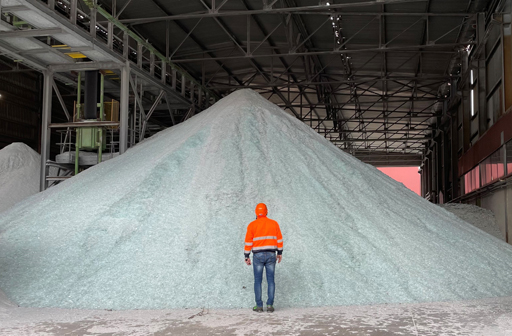
“This pilot project once again confirms that circularity for flat glass from the construction sector is not only theoretically possible, but can be concretely achieved through a structured, traceable operational model that complies with the highest quality standards,” said Arturo Benini, Marketing and Product Manager at Pilkington Italia. “Collaboration across the value chain was crucial in addressing the complexity of post-consumer glass recovery and turning it into an effective, scalable industrial practice.”
The initiative further strengthens Pilkington Italia’s commitment to an increasingly circular and sustainable industrial model, contributing to the reduction of waste generated by window replacement and to the development of a more environmentally responsible construction supply chain.