




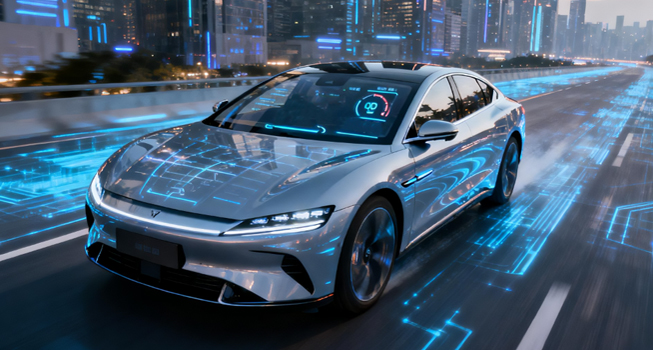
Today, with the rapid development of intelligent driving and new energy vehicles, automotive glass has ushered in a brand-new “smart era.” It is no longer a passive protective component, but has been upgraded to an active intelligent information interaction terminal.
The popularisation of the HUD (Head-Up Display) system projects key information such as vehicle speed, navigation and early warnings directly onto the front wind-shield, turning the glass into a display screen. This allows drivers to easily grasp all driving information without looking down at the instrument panel or navigation, making it both convenient and safe.
The application of Low-E coated glass and electrochromic glass can accurately adjust the entry of external thermal radiation, reducing heat input in summer and retaining indoor temperature in winter. It not only improves in-car comfort, but also reduces the energy consumption of new energy vehicles and extends their cruising range.
Moreover, smart glass integrated with antennas and various sensors has become an important physical carrier for 5G and V2X (Vehicle-to-Everything) internet of vehicles, enabling seamless connection between vehicles, roads and people, and escorting intelligent driving.
If you have questions about automotive glass production, processing or equipment, or wish to discuss the current development and future trends of the automotive glass industry, please feel free to contact LandGlass. Backed by its professional technical team, extensive industry experience and comprehensive service system, LandGlass provides comprehensive technical support and customised solutions.