



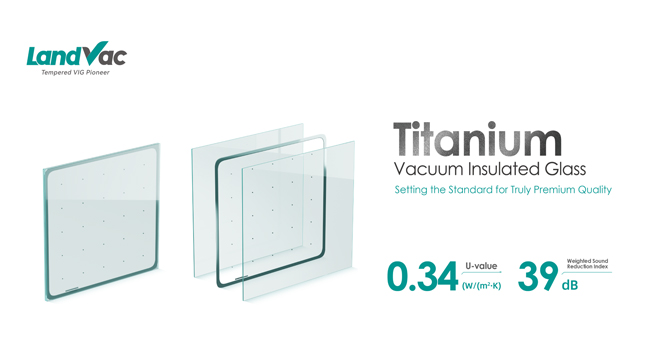
LandVac vacuum insulating glass is widely recognised for its superior thermal and acoustic insulation, making it a preferred choice for architectural windows, curtain walls and premium home renovation projects. When selecting high-performance glazing, customers naturally focus on two core concerns: the risk of spontaneous breakage and long-term durability. Below, these concerns are addressed through three key dimensions: risk management, actual breakage rates and product lifespan.
Q1: How does LandVac vacuum glazing mitigate the risk of spontaneous breakage?
A: LandVac employs a rigorous multi-step approach to minimise the risk of spontaneous breakage in Landvac vacuum glazing:
- Premium Raw Materials: LandVac sources high-quality raw glass sheet to minimise defects at the source.
- Advanced Tempering: the proprietary Cyclone tempering furnaces ensure exceptional glass flatness and uniform stress distribution.
- Flexible Metal Edge-Sealing: LandVac utilise a flexible metal sealing process, which enhances the resilience of the edge areas.
- Proprietary Stress Relief: a self-developed homogenisation and stress-relief processes ensure uniform edge stress, preventing the concentration of forces that can lead to failure.
- Enhanced Processing: for specific projects, LandVac offers ultra-clear glass or additional heat-soak testing for raw glass sheets to further reduce the probability of inclusions.
Q2: What is the spontaneous breakage rate of LandVac Ti-vacuum insulated glazing?
Spontaneity is generally calculated by weight; typically, one spontaneous breakage point occurs per 6 to 8 tonnes of raw float glass. For 1,000 sheets of 6 millimetre glass (1 by 1 metre), the statistical breakage rate is approximately 0.3 percent.
It is important to note that breakage rates vary significantly based on glass thickness, surface area, glass sheet quality, tempering precision and installation methods. While vacuum glass consists of two layers with edge stress, LandVac’s commitment to high-quality raw materials, optimised tempering and stringent homogenisation processes ensures that the spontaneous breakage rate of LandVac vacuum glazing is exceptionally low, remaining comparable to that of standard insulated glass units (IGU).
Q3: How is the service life of LandVac tempered vacuum glass guaranteed?
LandVac ensures long-term performance through four pillars of quality assurance:
- Inorganic Materials: LandVac Titanium Vacuum Glazing contains no organic materials, ensuring it will not degrade or fail over time.
- Core Manufacturing Processes: LandVac utilises high-temperature evacuation, metal-to-glass sealing, glass metallisation and advanced stress-relief protocols to ensure a hermetic, reliable seal.
- In-Line Quality Control: LandVac utilises multi-stage, real-time automated detection to identify and eliminate potential quality risks during production.
- Rigorous Testing: finished products undergo 19 rigorous inspections, including vacuum leak testing, high-precision U-value verification, microscopic interface analysis and residual gas analysis. These simulations assess performance, structural integrity and long-term reliability.
To date, samples of LandVac Vacuum Glazing have undergone up to 11 years of natural and accelerated ageing tests, with a projected service life exceeding 50 years.