




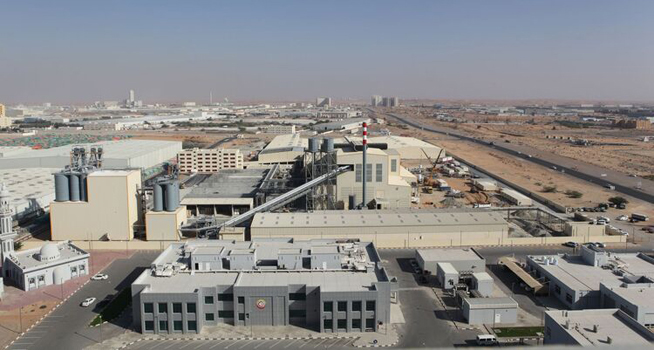
Following the March 2026 quarter trading period and management’s review of Saverglass 2H26 forecasts, including the impacts of the ongoing Middle East conflict, Orora is now able to update it.
FY26 underlying EBIT (EUR) for Saverglass is now expected to be approximately EUR 63 million to EUR 68 million (excluding direct impacts of the Middle East conflict), this is compared to the previous guidance of broadly in line with FY25 EBIT of EUR 79.2 million.
FY26 reported EBIT (EUR ) for Saverglass is now expected to be approximately EUR 52 million – EUR 59 million.
This reduction in reported FY26 forecast EBIT reflects both direct and indirect impacts of the Middle East conflict:
- Direct: operational and financial impacts relating to the Ras al Khaimah facility in the United Arab Emirates: 2H26 EBIT impact of approximately EUR 9 million – EUR 11 million, this amount will be separately disclosed as a significant item in the FY26 annual financial report; and
- Indirect: a combination of lower volumes than initially forecast and greater than anticipated negative mix shift towards premium wine and champagne compared to a decline in premium spirits. There is also a within-category mix impact lowering average selling price and margin. We believe this recent shift includes the impact of weaker customer confidence post the commencement of the Middle East conflict, leading to a forecast 2H26 EBIT impact of approximately EUR 11 million – EUR 16 million.
The Ras al Khaimah (RAK) facility in the United Arab Emirates shifts to closed loop ‘hot’ operation
Importantly, all team members in the region are accounted for and safe, and the glass production facility at RAK has not sustained any damage. Ensuring the safety and wellbeing of its team members remains Orora’s first priority.
Since the commencement of the Middle East conflict on February 28, 2026, shipping routes have been closed, and overland routes are inaccessible. Accordingly, a decision has been made to transition the RAK facility to a closed‑loop ‘hot’ operation, whereby the furnace will be kept warm with no bottle production taking place.
The RAK furnace (4 lines) represents approximately 15 percent of Saverglass production capacity, with most of the recent production geared toward global premium and ultra-premium wines for the North American market. The production of these bottles will now shift to Mexico, with moulds to be transported to the Acatlán facility to facilitate production from late FY26.
The full report is available here.