



Italy’s glass industry has consolidated its position as Europe’s leading manufacturing hub, surpassing Germany in terms of production capacity and industrial structure, despite ongoing pressure from high energy costs.
According to Resolglass analysis based on industry data, the sector includes 111 production sites, employs over 16,500 people, and generates approximately EUR 3.2 billion in added value, with employment increasing by around 3 percent in 2025.
Energy remains a critical factor
Energy costs continue to represent the main competitive challenge. In 2024, the average electricity price for Italian industry reached EUR 109/MWh, significantly higher than in France (EUR 58/MWh) and Spain (EUR 63/MWh).
While partial stabilisation has been observed in 2025–2026, energy pricing remains a key variable for the sector’s competitiveness at European level.
Trade balance and market resilience
Despite these pressures, the industry maintains a positive trade balance, estimated at around EUR 75 million, supported by resilient export performance and stable demand across key European markets.
Production trends vary across segments, with some declines recorded in specific areas. However, the sector continues to demonstrate strong adaptability, shifting towards higher value-added products and more efficient manufacturing processes.
Glass and its role in sustainable construction
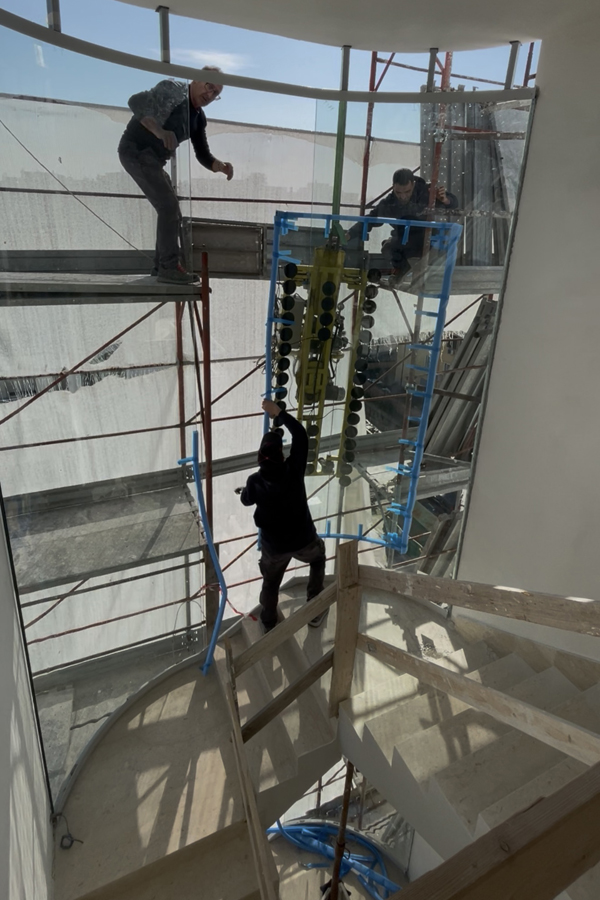
Looking ahead, one of the main growth drivers is expected to be the construction sector. Glass, a fully recyclable material, is increasingly recognised as a key component for improving building energy performance and reducing urban emissions.
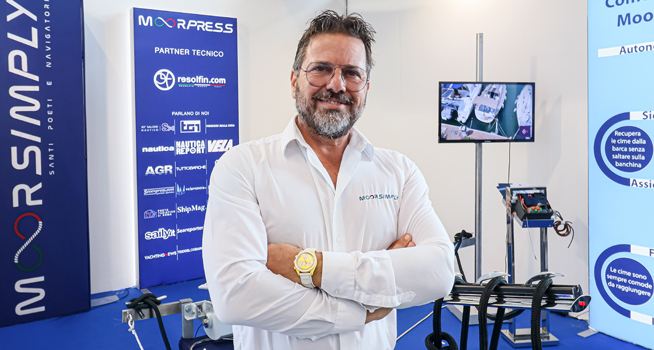
“The glass industry represents a strategic infrastructure for both industrial and ecological transition,” said Enrico Scozzari, founder of Resolglass, a brand of the Resolfin Group active since 1964.
From traditional manufacturing to integrated industrial model
Resolfin operates across multiple sectors, including construction, visual communication, technical design and the blue economy, maintaining a consistent industrial strategy focused on quality production, continuous research and reduced environmental impact.
The company’s origins date back to 1964, when Giacomo Scozzari established a small metalworking workshop in Rome, specialising in brass and glass furnishings. Over the decades, the business evolved into a diversified industrial group.
Today, the company is led by Enrico Scozzari, who has expanded the group’s activities across multiple industries, combining engineering expertise with product innovation and sustainability-driven processes.
Energy independence and circular economy
Since 2019, the company has achieved energy self-sufficiency through a photovoltaic system installed at its production facility.
In 2022, it introduced technical textiles made from recycled marine plastic, integrating circular economy principles into its manufacturing processes. This approach combines environmental impact reduction with industrial competitiveness, aligning with broader European sustainability targets.