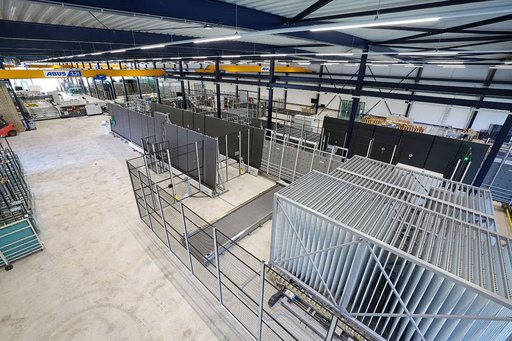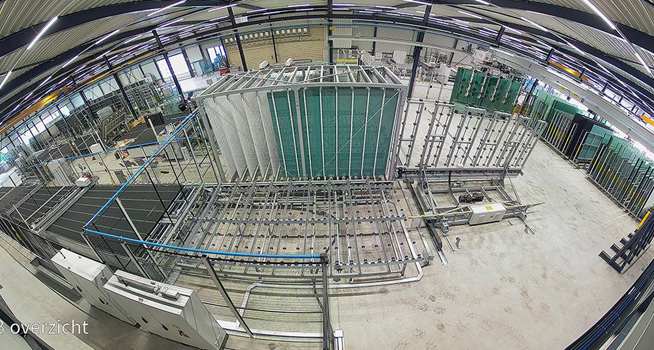
To support ambitious growth plans, the Dutch company Buys Glas didn’t just expand its production space, they invested in smart automation. At the centre of this transformation is LiSEC’s GPS.autofab system, which allows seamless integration of various processing machines, even from different suppliers, into one streamlined workflow. The result? A highly automated line that handles single glass sheets with precision and reliability.
The collaboration between Buys Glas and LiSEC began at the greenfield phase of the installation. Mr. Youri Kurvers, owner-manager of Buys Glas, remembers sketching his vision for the future into a digital building map during the first online meeting with LiSEC.
A range of LiSEC solutions supports and automates Buys Glas’ production process. On the machinery side, Buys Glas has invested in an automated storage system for jumbo formats that transfers the glass panes to two cutting lines: an ESL-RS float cutting machine with automatic XYZ breaking, which enables the edge deletion and cutting of float glass in a single operation, and a DSC-A + VB laminated glass cutting machine, which can process both rectangles and special shapes up to a thickness of 12/4,56/12.
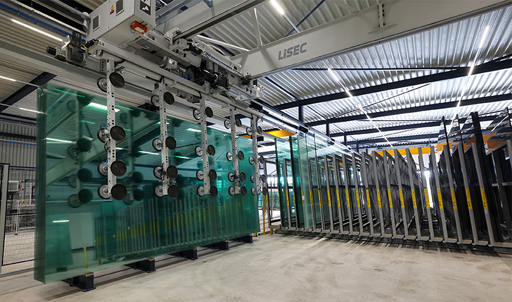
Both cutting lines feed into an intelligent buffer shuttle system, which ensures the uninterrupted flow of glass between the cutting and processing lines. Thanks to sophisticated automation, the entire line can be operated efficiently with just a few employees.
On the software side, production planning is handled in GPS.prod, with ready messaging managed via GPS.ident using a manual scanner. GPS.autofab coordinates the production flow and plays a central role in bringing this integration to life.
GPS.autofab is designed to interconnect machinery and enable smooth data exchange with ERP systems. This includes determining the path of each glass pane through the production process and managing buffer systems to optimise efficiency.
A key feature of the GPS.autofab solution at Buys Glas is its ability to integrate third-party machines through targeted data communication. A dedicated interface was developed to generate drawings for each pane, storing them in a directory with all necessary processing information. Communication between the out-feed conveyor and the edge processing machine enables precise routing of panes, ensuring they are processed in the correct sequence.