

The story of NBS is of a company that has built its growth around a simple yet radical question: how should a glass factory operate today, and how will it need to operate tomorrow?
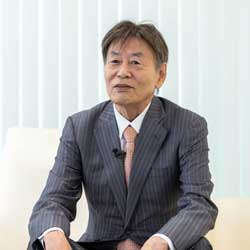
“Our story began in 1987,” says Toshiaki Kato, CEO and Founder of NBS. “At the time, we were a glass delivery company.”
NBS expanded its role from logistics to operational support, to direct management of production activities. This led the company first into tempered glass, then laminated glass and ultimately to becoming a manufacturer of glass products.
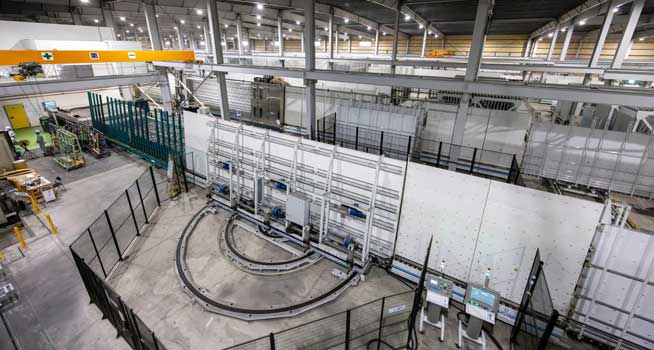
At its East Japan facility, NBS produces large-sized insulating glass and is recognised as one of the most structured players in the Japanese glass industry.
From standard products to large formats
Before the construction of the new plant, NBS’s production focused mainly on standard products. However, ongoing market analysis and constant dialogue with customers highlighted a clear shift.
“We regalised that, especially in the lower sections of buildings, glass sizes in Japan were becoming significantly larger,” Kato said.
This led to a strategic decision: to build a factory capable of handling jumbo glass sheets up to 3,300 by 9,000 millimetres without compromising efficiency, quality or cost competitiveness.
Automation and the Sorting System: the core of the project
During the project’s development phase, NBS visited other plants and observed existing solutions in operation. It was at this point that the collaboration with Forel truly took shape.
Approximately 60 percent of the equipment installed in the new facility was supplied by Forel. A single machine did not drive this choice, but Forel’s ability to deliver a fully integrated production flow.
In a factory of this scale, coordination between stages is essential. Choosing a single partner capable of ensuring this consistency proved to be a decisive factor.
Automation with a human purpose
At the East Japan facility, automation is not driven solely by productivity goals. Handling nine-metre-long glass sheets manually is neither feasible or sustainable in terms of safety and operational continuity.
Thanks to Forel’s solution, operators can now focus on supervision, quality control and process optimisation. The result is a safer working environment and a more stable long-term production model.
A factory designed for the ages
NBS’ East Japan facility is one of the largest and most advanced glass plants worldwide. It was designed around the principles of automation, systemisation and IoT integration to support production focused, high-value-added products.
With this foundation in place, NBS looks to the future with clear objectives: consolidate its competitive advantage and verify its position as a national benchmark for large-format architectural glass production. It is a factory designed for today’s needs and for decades to come.